

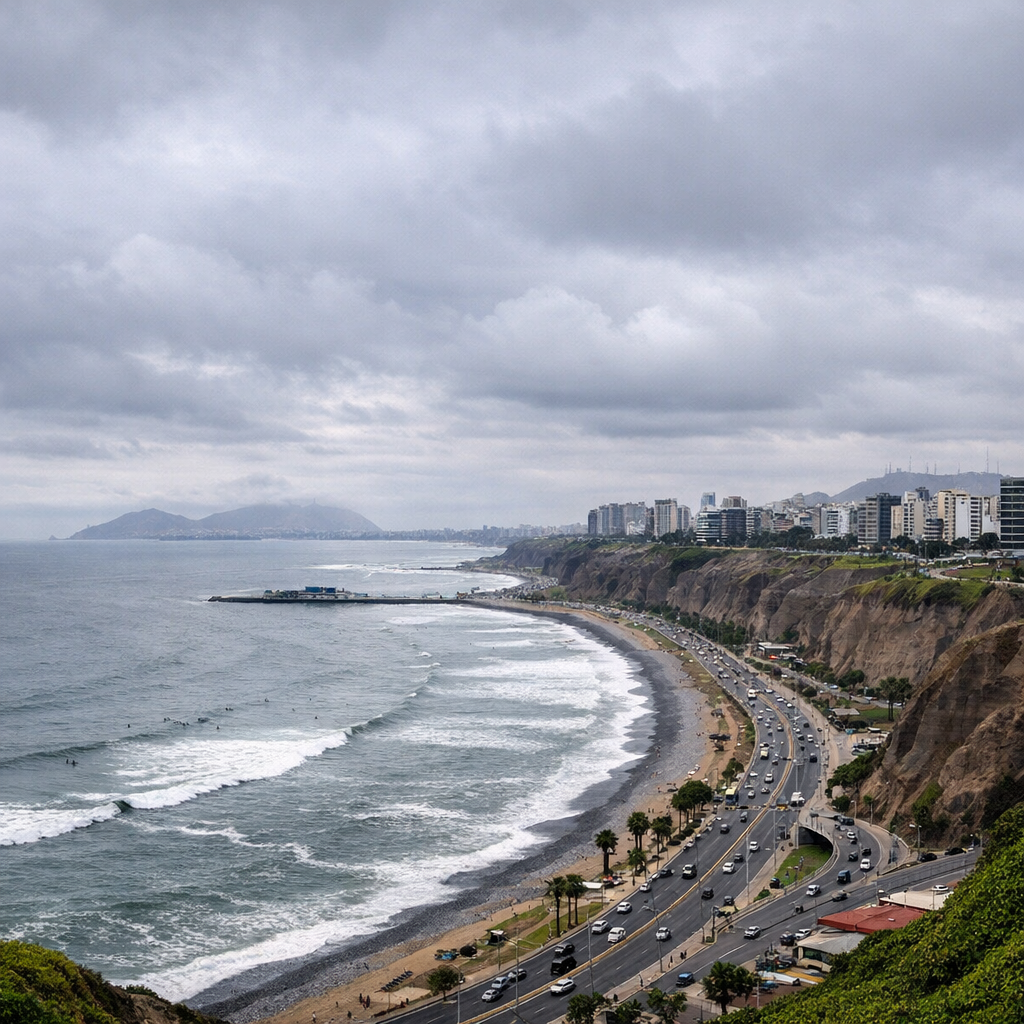
Lima, the capital of Peru, boasts a climate that defies typical expectations for a city located just 12 degrees south of the equator. Despite its tropical latitude, Lima experiences a mild, arid climate, largely due to the cold Humboldt Current that flows along the western coast of South America. This current moderates temperatures and contributes to the city’s characteristic weather patterns.
Climate Overview
Lima’s climate is generally divided into two main seasons:
Summer (December to April)
During the summer months, Lima enjoys warm and humid conditions with temperatures ranging from lows of 18-22°C (64-72°F) to highs of 24-29°C (75-84°F). Mornings may start with dense fog, but it typically clears by the afternoon, leading to impressive sunsets with vibrant colors stretching across the sky.
Winter (June to October)
Winter in Lima is characterized by grey skies, heavy fog throughout the day, and a light drizzle known locally as “garúa.” Temperatures during this period hover between lows of 12-16°C (54-61°F) and highs of 16-19°C (61-66°F). The high humidity, combined with cooler temperatures, results in a constant heavy mist or drizzle, which may prove inhibitive for outdoor exploration.
Environmental Challenges
Beyond its unique climate, Lima faces several environmental challenges that impact the health and well-being of its residents.
Air Pollution
Air quality in Lima has been a growing concern. The Servicio Nacional de Meteorología e Hidrología del Perú (Senamhi) has reported that the quality of air in Lima Metropolitana reached “unhealthy” levels, with several monitoring stations recording concentrations of fine particulate matter (PM2.5) exceeding the Environmental Quality Standards (ECA) for air. Factors contributing to this include an aging vehicle fleet with outdated technologies and industrial emissions.
Water Scarcity
Lima’s geographical location in a desert region, combined with rapid urbanization and climate change, has led to significant water scarcity issues. Many residents, especially in peri-urban areas, lack access to piped water and rely on expensive water deliveries. The Rimac River, Lima’s primary water source, faces pollution challenges, further exacerbating the situation.
Deforestation and Urban Green Spaces
Efforts to combat environmental degradation have led to inspiring initiatives. For instance, a family in San Juan de Lurigancho transformed an arid hillside into a lush green space with over 100 species of trees, improving the local microclimate and providing a refuge for wildlife. Such projects highlight the potential for community-driven solutions to environmental challenges.
Understanding Lima’s unique climate and addressing its environmental challenges require a concerted effort from both authorities and residents. By promoting sustainable practices and supporting green initiatives, Lima can work towards a healthier and more resilient urban environment.