

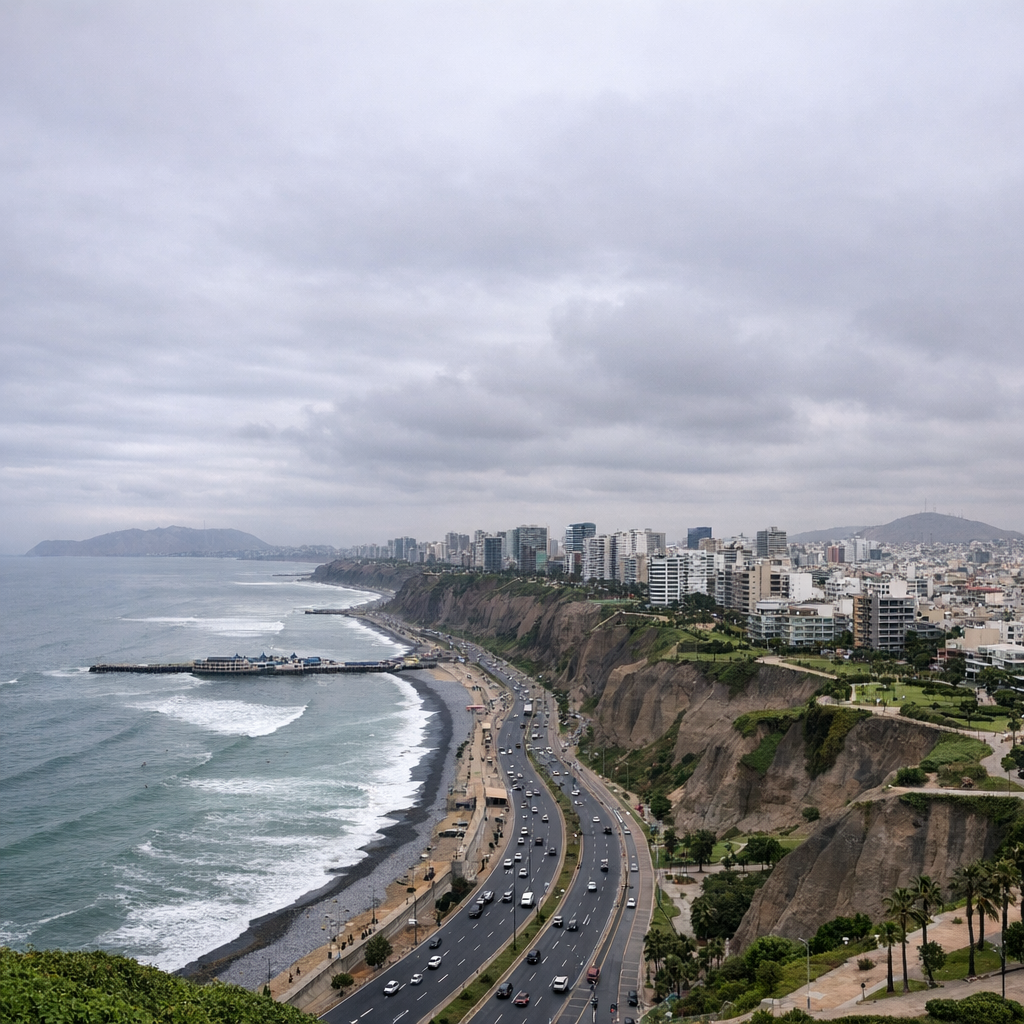
Lima, the capital of Peru, boasts a climate that defies typical expectations for a city located just 12 degrees south of the equator. Instead of tropical conditions, Lima experiences a mild, subtropical desert climate, characterized by minimal rainfall and moderate temperatures throughout the year.
Climate Overview
Situated on the arid desert coast of Peru, Lima’s climate is influenced by the cold Humboldt Current running along the Peruvian and Chilean coasts. This current regulates temperatures, resulting in relatively moderate annual temperature ranges. The city experiences two main seasons:
Summer (December to April)
During summer, Lima is generally warm, humid, and sunny, with occasional dense fog in the mornings that typically clears by the afternoon. Temperatures range from lows of 18-22°C (64-72°F) to highs of 24-29°C (75-84°F). The sunsets during this season are often impressive, with vibrant colors stretching across the sky.
Winter (June to October)
Winter in Lima is characterized by grey skies, heavy fog throughout the day, and a light drizzle known locally as “garúa.” Temperatures hover between lows of 12-16°C (54-61°F) and highs of 16-19°C (61-66°F) along the coast. Despite the high humidity, rainfall is nearly nonexistent in Lima.
Environmental Challenges
Beyond its unique climate, Lima faces several environmental challenges that impact the health and well-being of its residents.
Air Pollution
Air quality in Lima has been a growing concern. Factors contributing to this issue include an aging vehicle fleet with outdated technologies and industrial emissions. The transportation sector, with vehicles operating for decades without renewal, significantly deteriorates air quality. Additionally, industrial activities, especially those lacking proper oversight and relying on fossil fuels, contribute to the problem. Natural factors, such as Lima’s arid terrain and lack of rainfall, exacerbate the situation by facilitating the suspension of particulate matter in the air.
Water Scarcity
Access to clean drinking water is another pressing issue for Lima. The city’s main water source, the Rimac River, faces pollution threats from mining activities near its origin. Climate change has led to reduced rainfall and accelerated glacier retreat, increasing the likelihood of prolonged droughts. Rapid urbanization and population growth have further strained water resources, leading to significant disparities in water access among different socio-economic groups.
Conclusion
Understanding Lima’s unique climate is essential for residents and visitors alike. While the city’s weather patterns offer a mild and relatively stable environment, the accompanying environmental challenges require concerted efforts from both the government and the community to ensure a sustainable and healthy future for all.